
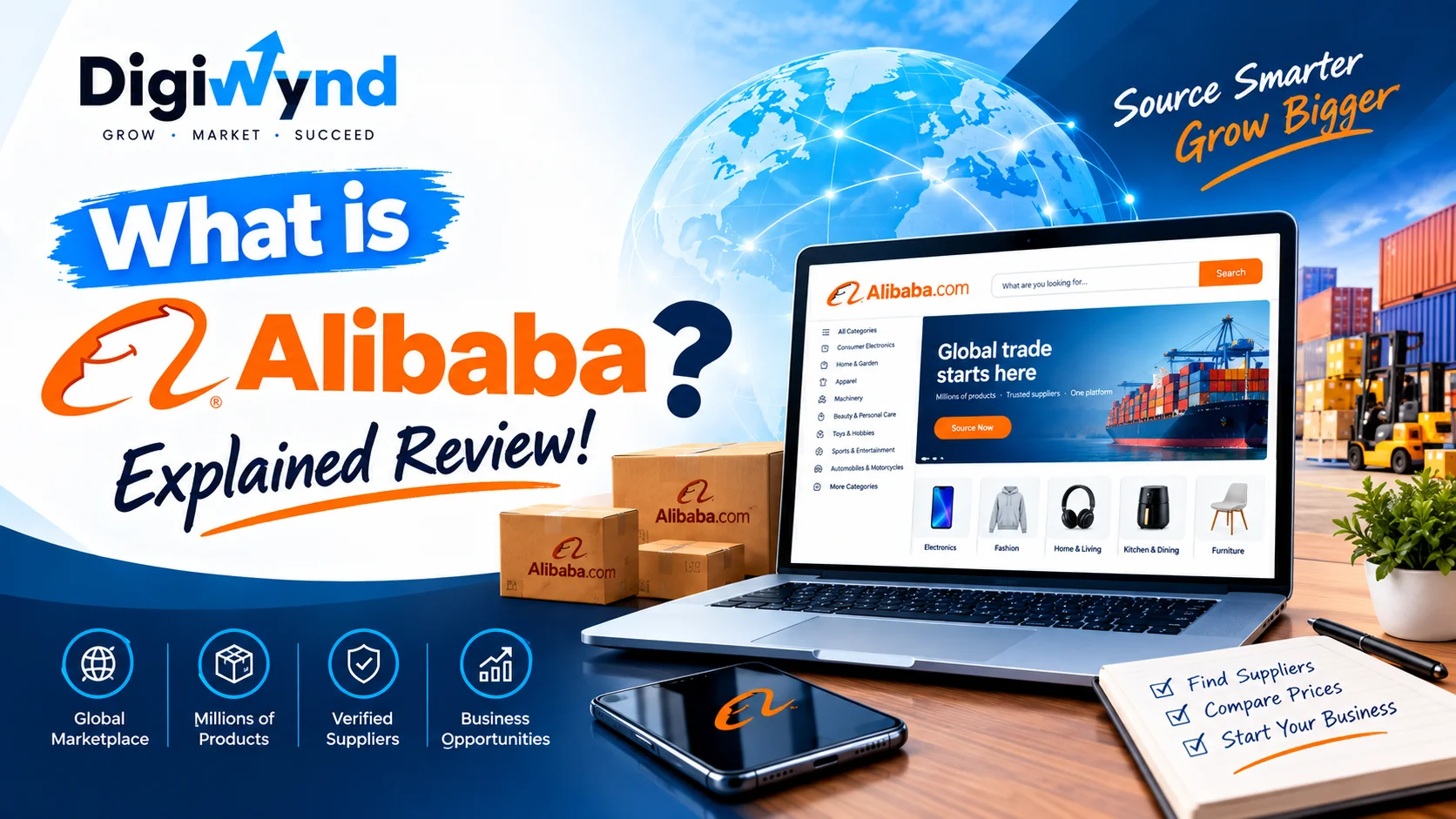
What Is Alibaba?
Alibaba.com launched in 1999 as the first business of Alibaba Group. Unlike a typical consumer shopping website, its primary purpose is B2B commerce. Buyers often purchase in bulk, negotiate specifications, request samples, customize packaging, or develop products under their own brand.
Alibaba Group states that Alibaba.com served more than 48 million small and medium-sized enterprises across more than 190 countries and regions during fiscal year 2024. The platform supports product discovery, supplier communication, online transactions, digital marketing, supply-chain fulfillment, and after-sales support.
Alibaba.com vs Alibaba Group
Alibaba Group is the parent technology company with businesses spanning ecommerce and cloud computing. Alibaba.com is its international B2B sourcing marketplace. It should not be confused with AliExpress, which is more consumer-focused, or other Alibaba Group platforms serving different markets.
When people ask, “What is Alibaba?” they often mean Alibaba.com, where businesses contact suppliers and negotiate wholesale orders.
How Does Alibaba Work?
A buyer searches for a product, filters suppliers, reviews company profiles, and sends inquiries. The buyer and supplier then discuss price, minimum order quantity, materials, sizes, branding, packaging, samples, production time, quality standards, shipping, and payment terms.
Once both sides agree, they can create an online order and pay through Alibaba.com. The supplier produces or prepares the goods, the buyer may arrange an inspection, and the shipment is delivered using an agreed logistics method.
Who Uses Alibaba?
Alibaba.com serves retailers, Amazon sellers, private-label brands, wholesalers, distributors, manufacturers, importers, startups, and organizations purchasing products for business use. Sellers include factories, trading companies, wholesalers, and service providers from many countries.
The platform is useful when a business needs bulk prices, custom specifications, branded packaging, or access to factories that are difficult to find locally.
How to Find Products on Alibaba
Buyers can search by keyword, browse categories, upload a product image, or publish a Request for Quotation. Search results normally display product details, price ranges, order quantities, supplier credentials, response information, and Trade Assurance availability.
Use precise phrases such as product type, material, size, target market, and customization. Broad searches produce too many unrelated results, while detailed searches help reveal suppliers with relevant experience.
What Is an RFQ on Alibaba?
A Request for Quotation, or RFQ, lets a buyer describe the product, quantity, specifications, destination, and purchasing requirements once. Relevant suppliers can then submit quotations. This reverses the normal search process and can save time when the product is specialized.
Alibaba’s seller information describes RFQ as a B2B bidding marketplace where suppliers proactively respond to buyer demand. Buyers should still compare every quotation carefully and verify each supplier.
What Is a Minimum Order Quantity?
The minimum order quantity, commonly called MOQ, is the smallest quantity a supplier is willing to produce or sell under stated terms. MOQs vary according to product, materials, manufacturing setup, customization, and packaging.
An advertised MOQ is sometimes negotiable, especially for standard products or paid samples. However, a lower quantity may increase the cost per unit. Ask for pricing at several order levels so you can compare total landed cost and risk.
Verified Suppliers and Supplier Checks
A Verified Supplier badge means certain business information and capabilities have undergone additional assessment. It is a useful screening signal, but it does not guarantee that every product or transaction will meet your requirements.
Review the company profile, business type, operating history, main products, certifications, factory information, transaction records, response quality, and customer feedback. Request a video meeting, business documents, recent audit information, product samples, and references when the order value justifies deeper due diligence.
What Is Alibaba Trade Assurance?
Trade Assurance is Alibaba.com’s order-protection and secure-payment service. Official Alibaba information says it is designed to help with product-quality or shipping issues when the agreed order terms are not met.
Protection depends on the written online order. Put exact materials, dimensions, tolerances, colors, packaging, labeling, inspection standards, shipping date, and other requirements into the contract. Pay through the payment method and account designated by Alibaba.com. Private messages or off-platform payments can weaken or remove protection.
How to Buy Safely on Alibaba
• Create a detailed product specification before contacting suppliers.
• Shortlist several relevant suppliers instead of choosing the first result.
• Verify the company and clarify whether it is a factory or trading company.
• Order and approve samples before mass production.
• Record every critical requirement in the Alibaba order.
• Use Trade Assurance and pay through Alibaba.com.
• Arrange a pre-shipment inspection for meaningful orders.
• Confirm shipping terms, duties, compliance, and total landed cost.
Product Samples and Quality Control
A sample helps verify design, materials, construction, packaging, and communication quality. The first sample may not perfectly represent mass production, so create an approved reference sample and written specification.
For larger orders, use quality checkpoints during production or arrange an independent pre-shipment inspection. Define acceptable quality limits, test methods, defect categories, and remedies before production begins.
Alibaba Pricing and Negotiation
Displayed prices are often estimates based on quantity, configuration, or incomplete specifications. The final quotation may change after you define customization, packaging, shipping, and payment terms.
Negotiate professionally by sharing a clear specification, realistic order quantity, target timeline, and future purchasing potential. Compare quotations on identical terms. The cheapest unit price can become the most expensive option if quality, delays, duties, or rework are ignored.
Shipping Terms and Landed Cost
Product price is only one part of importing. Landed cost may include samples, molds, packaging, inspection, freight, insurance, customs duties, taxes, port charges, brokerage, storage, and final delivery.
Understand Incoterms such as EXW, FOB, CIF, and DDP before accepting a quotation. Each term changes which party handles transport, risk, documentation, and costs. Work with a qualified freight forwarder or customs professional when necessary.
Advantages of Alibaba
• Global supplier access: compare manufacturers and wholesalers across many markets.
• Large product selection: source standard, customized, and private-label goods.
• Direct communication: discuss specifications, price, samples, and production.
• Flexible quantities: options range from samples to container-scale orders.
• Trade Assurance: eligible online orders receive payment and dispute support.
• RFQ tools: invite suppliers to quote against one sourcing brief.
• Business growth: develop products and supply relationships for long-term sales.
Disadvantages and Risks
Alibaba is a marketplace, so supplier quality and reliability vary. Common risks include misleading listings, inconsistent samples and production, intellectual-property problems, delayed shipping, hidden costs, compliance failures, counterfeit goods, and communication misunderstandings.
International sourcing also requires longer lead times and more working capital. Returns can be difficult once goods have crossed borders. These risks do not make Alibaba unsuitable, but they make due diligence, documentation, inspections, and conservative first orders essential.
Is Alibaba Legit and Safe?
Yes, Alibaba.com is a legitimate global B2B platform. However, legitimacy of the platform does not mean every supplier or product is automatically safe. Buyers must evaluate the specific counterparty and transaction.
Keep negotiations documented, use official checkout, avoid unexplained off-platform payment requests, protect intellectual property, verify regulatory requirements, and test suppliers with samples or smaller orders before scaling.
Alibaba vs AliExpress
Alibaba.com focuses on B2B sourcing, negotiation, bulk orders, customization, and manufacturing relationships. AliExpress is generally designed for consumers and smaller ready-to-ship purchases. Alibaba may offer lower unit costs at volume, while AliExpress may be simpler for testing a few units.
The correct choice depends on order quantity, customization, business experience, time, and risk tolerance.
Alibaba vs Amazon
Alibaba.com is mainly a sourcing and wholesale platform, while Amazon is primarily a retail marketplace where consumers purchase finished products. Many entrepreneurs source or manufacture goods through Alibaba and later sell them on Amazon.
That business model can work only when demand, differentiation, quality, compliance, fees, advertising, and profit margins are validated. Our Digiwynd guide on why businesses sell on Amazon explains the retail side of this process, while the private-label guide covers brand development.
Is Alibaba Good for Private Label?
Alibaba can be valuable for private-label brands because many suppliers offer custom logos, colors, packaging, materials, and product modifications. The platform also makes it possible to compare factories and request samples.
Private label success still depends on product research, intellectual-property checks, unique positioning, quality control, regulatory compliance, and a realistic launch budget. A generic product with a logo is rarely a durable competitive advantage.
How to Choose an Alibaba Supplier
• Create a shortlist of five to ten relevant suppliers.
• Send the same detailed request to each company.
• Compare response quality, not only speed.
• Verify business identity and manufacturing capabilities.
• Review certifications with the issuing body when important.
• Order samples from the strongest candidates.
• Assess sample quality, packaging, and communication.
• Negotiate a clear online contract and inspection plan.
• Start with a manageable commercial order before scaling.
Tips for Better Alibaba Sourcing
Use a professional sourcing brief with drawings, photos, materials, measurements, tolerances, packaging, labeling, compliance standards, destination, quantity, and target date. Ask direct questions and request written confirmation.
Do not reveal an unrealistic target price before understanding the cost structure. Compare suppliers fairly, maintain backup options, and calculate cash flow around production and shipping delays. Treat sourcing as supplier management, not simply online shopping.
Alibaba Review: Is It Worth Using?
Alibaba.com is worth considering for businesses that need wholesale products, private-label manufacturing, custom goods, or international supplier relationships. Its selection, communication tools, RFQ system, and Trade Assurance can make global sourcing more accessible.
It is not a shortcut to guaranteed profit. Buyers who skip verification, samples, contracts, inspections, and landed-cost calculations can suffer expensive mistakes. Used with a disciplined process, Alibaba can become a strong sourcing channel.
Frequently Asked Questions
Can individuals buy from Alibaba?
Yes, but many offers are designed for business quantities and may have an MOQ.
Is Alibaba only for Chinese suppliers?
No. Suppliers and buyers participate from many countries and regions.
Are Alibaba prices final?
Often they are indicative ranges. Final pricing depends on quantity, specification, customization, packaging, and shipping.
Does Trade Assurance guarantee every order?
No. Coverage depends on eligibility, payment through Alibaba.com, and the written online order terms.
Should I order samples?
Yes. Samples and inspections are important steps for evaluating quality before a large order.
Can I build a private-label brand with Alibaba?
Yes, if the supplier supports customization and you manage research, quality, compliance, branding, and intellectual property properly.
Final Thoughts
Alibaba.com is a powerful global B2B marketplace for discovering suppliers, negotiating wholesale orders, and developing products. Its greatest value is access; its greatest challenge is controlling risk across suppliers, quality, contracts, shipping, and compliance. Start with detailed requirements, verify suppliers, use protected on-platform transactions, inspect goods, and scale only after the supplier proves reliable.